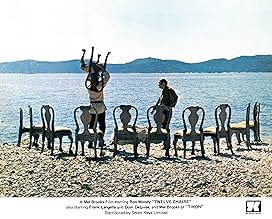
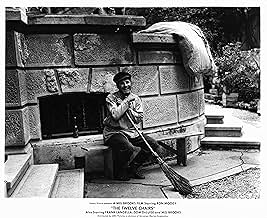
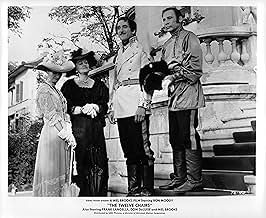
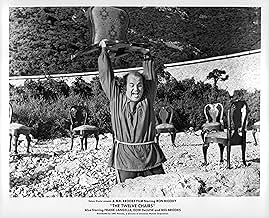
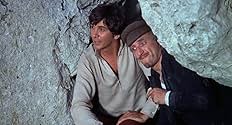
In 1920s Soviet Russia, a fallen aristocrat, a priest and a con artist search for a treasure of jewels hidden inside one of twelve dining chairs, lost during the revolution.In 1920s Soviet Russia, a fallen aristocrat, a priest and a con artist search for a treasure of jewels hidden inside one of twelve dining chairs, lost during the revolution.In 1920s Soviet Russia, a fallen aristocrat, a priest and a con artist search for a treasure of jewels hidden inside one of twelve dining chairs, lost during the revolution.
- Awards
- 1 win & 1 nomination total
- Nikolai Sestrin
- (as Andreas Voutsinas)
- Peasant
- (as Mladja Veselinovic)
- Sergeant
- (uncredited)
- Orator
- (uncredited)
Summary
Reviewers say 'The Twelve Chairs' Lorem ipsum dolor sit amet, consectetur adipiscing elit, sed do eiusmod tempor incididunt ut labore et dolore magna aliqua. Ut enim ad minim veniam, quis nostrud exercitation ullamco laboris nisi ut aliquip ex ea commodo consequat. Duis aute irure dolor in reprehenderit in voluptate velit esse cillum dolore eu fugiat nulla pariatur. Excepteur sint occaecat cupidatat non proident, sunt in culpa qui officia deserunt mollit anim id est laborum. Curabitur pretium tincidunt lacus.
Did you know
- TriviaMel Brooks had problems with Yugoslavian extras who didn't speak English. In one scene, extras playing museum guards were supposed to walk through a museum, ringing hand bells and shouting, "Closing time! Closing time!" Instead, the extras misunderstood and shouted, "Cloakie Bye! Cloakie Bye!" Brooks decided "Cloakie Bye" was funnier, so he left it in the movie.
- GoofsDuring the chase through the train yard, a modern era bus can be seen passing in the background.
- Quotes
- Ostap Bender: [after yet another failure] Remember the famous Russian proverb: "The hungrier you get, the tastier the meal." On the other hand, the French have a proverb: merde!
- Crazy creditsIn the opening credits the title of the movie is showed in Russian first (even with a typographic error 'Dvenadzat' stchlyev'), then it changes into the english title. The same happened at the end of the credits with the words "The end" (Konez), first cames the Russian word, than the english translation.
- ConnectionsFeatured in Sneak Previews: Take 2: Who's Funnier: Mel Brooks or Woody Allen? (1980)
- SoundtracksHope for the Best, Expect the Worst
Music by Johannes Brahms ("Hungarian Dance No. 4 in F# minor") and lyrics by Mel Brooks
Details
Box office
- Budget
- $1,200,000 (estimated)