Release calendarTop 250 moviesMost popular moviesBrowse movies by genreTop box officeShowtimes & ticketsMovie newsIndia movie spotlight
    What's on TV & streamingTop 250 TV showsMost popular TV showsBrowse TV shows by genreTV news
    What to watchLatest trailersIMDb OriginalsIMDb PicksIMDb SpotlightFamily entertainment guideIMDb Podcasts
    OscarsPrimetime EmmysToronto Int'l Film FestivalFall TV GuideMost Anticipated This MonthSTARmeter AwardsAwards CentralFestival CentralAll events
    Born todayTrending peopleCelebrity news
    IMDb LabsHelp centerContributor zonePolls
For industry professionals
  • Language
  • Fully supported
  • English (United States)
    Partially supported
    Some content may be auto-translated
  • Français (Canada)
  • Français (France)
  • Deutsch (Deutschland)
  • हिंदी (भारत)
  • Italiano (Italia)
  • Português (Brasil)
  • Español (España)
  • Español (México)
Watchlist
Sign in
  • Fully supported
  • English (United States)
    Partially supported
    Some content may be auto-translated
  • Français (Canada)
  • Français (France)
  • Deutsch (Deutschland)
  • हिंदी (भारत)
  • Italiano (Italia)
  • Português (Brasil)
  • Español (España)
  • Español (México)
Use app
  • Biography
  • Trivia
IMDbPro

Christina Toumba

  • Actress
IMDbProStarmeterSee rank
Member of THEAMA, the first and internationally acclaimed Greek inclusive theatre company consisted of disabled actors in its main composition (such as the renowned actor and director Vassilis Oikonomou who founded THEAMA in 2010, Panos Zournatzidis, Marina Besiri, Giorgos Iliakis, Maria Mourelatou and herself) as well as by non-disabled ones (such as Michalis Tamboukas and her mother Efi Toumba). Her course as a staggering actress is expressed representatively in the documentary THE.AM.A. (2014), directed by Eliana Perifanou and Maria Sidiropoulou depicts the work of this exquisite theatre group and it was filmed mainly during the rehearsals and the performance of Edward Albee's "The Zoo Story", a critically acclaimed production brilliantly directed by Vassilis Oikonomou. On the occasion of World Theatre Day (WTD) March 27, the documentary was broadcast that day in 2015 by the Greek TV network of Public Television.
  • More at IMDbPro
    • Contact info
    • Agent info
IMDbProStarmeterSee rank
Add photos, demo reels
  • View contact info at IMDbPro
  • Known for

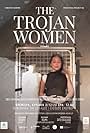
    Sofia Stavrakaki in Troades (2023)
    Troades
    • Actress
    • 2023
    Giorgos Iliakis and Maria Mourelatou in The Zoo Story (2016)
    The Zoo Story
    TV Movie
    • 'Woman who Cries'
    • 2016
    Epta syn ena (2009)
    Epta syn ena
    Short
    • Self - Spectator 5(as Xristina Toumpa)
    • 2009
    THE.AM.A.
    Short
    • Self(as Hristina Touba)
    • 2014

    Credits

    IMDbPro

    Actress


    • Sofia Stavrakaki in Troades (2023)
      Troades
      • 2023
    • Giorgos Iliakis and Maria Mourelatou in The Zoo Story (2016)
      The Zoo Story
      TV Movie
      • 'Woman who Cries'
      • 2016

    Personal details

    • Alternative names
      • Hristina Touba
    • Parents
      • Efi Toumba
    • Other works
      Chorus member in Sophocles' "Antigone" in an acclaimed stage production of THEAMA, co-directed by Vassilis Oikonomou and Eliana Perifanou. Antigone was portrayed by Elie Driva, Creon by Panos Zournatzidis, the Guard and the Messenger by Michalis Tamboukas, Ismene by Vicky Petropoulou, Tiresias by Konstantinos Loukas, Haemon by Manos Triantafillakis, and Eurydice by Efi Toumba. Chorus was also consisted by Aimiliani Avraam, Katerina Kontomarkou and Vassilis Oikonomou as Leaders, and Hannah El Haj Omar, Maria Mourelatou and Angeliki Nomikou as members. The exquisite music of the production was composed by Elias Kourtparasidis.

    Did you know

    • Trivia
      In 2016 she played remarkably the role of Darius's widow and Xerxes's mother Atossa in Aeschylus' "The Persians", translated and directed by Vassilis Oikonomou in the acclaimed production of THEAMA, which was first presented at the Athens and Epidaurus Festival in the New Stage Nikos Kourkoulos of the National Theatre of Greece. Next it was also presented on tour in other Festivals and cities of Greece and it was welcomed as a significant artistic event of the Athens and Epidaurus Festival, praised by critics and audiences who considered it even as the best production of "The Persians" they had ever seen. Christina Toumba, delivering the Queen's words from her wheelchair, shared the role together on stage with the deaf actress Christina Tsavli who incarnated her physical presence. Darius was portrayed by Panos Zournatzidis, the Messenger by Michalis Tamboukas, Xerxes by Vassilis Oikonomou and Yiota Vei was the Chorus Leader. Chorus was consisted by Aimiliani Avraam (Leader II), Marina Besiri, Michalis Grammatas, Giorgos Iliakis, Marina Stamati, Mary Stamatoula and Efi Toumba. "The Persians" (472 BC) is Aeschylus' first saved play and thus more ancient one, and a fundamental stone for the art of theatre. The play is also the only one of the ancient Greek dramaturgy with a plot inspired not by myths which were also serving on stage as a reference to contemporary social and political events and issues like the other plays that eventually remained to the later generations, but it is immediately related with the historical events of the aftermaths that followed the Battle of Salamis, where Aeschylus fought in 480 BC. A significant factor of Aeschylus' legacy in the "The Persians" is the fact that he wrote about the victory of his fellow-citizens Athenians through the tragedy of their opponents, the Persians, caused by the loss of innumerable men due to the defeat of their army, which was led by Xerxes for the conquest of Greece. Here Aeschylus pointed out the only value of life, which is based on the humility and love that people share the one with the other in opposition to the hubris of the arrogance of power (such as the one of Xerxes) which can lead to a megalomania that devastates lands and ruins lives. Through this narration of the story, Aeschylus spoke about everything concerning human relations and life as it was also later developed by other playwrights and above all Shakespeare in many ways, setting thus the very substance of theatre that has much to do with the realization and sense of one's place through the understanding of the position of others.

    Contribute to this page

    Suggest an edit or add missing content
    • Learn more about contributing
    Edit page

    More to explore

    Recently viewed

    You have no recently viewed pages
    Get the IMDb app
    Sign in for more accessSign in for more access
    Follow IMDb on social
    Get the IMDb app
    For Android and iOS
    Get the IMDb app
    • Help
    • Site Index
    • IMDbPro
    • Box Office Mojo
    • License IMDb Data
    • Press Room
    • Advertising
    • Jobs
    • Conditions of Use
    • Privacy Policy
    • Your Ads Privacy Choices
    IMDb, an Amazon company

    © 1990-2026 by IMDb.com, Inc.