Anurag Singh(II)
- Writer
- Director
- Second Unit Director or Assistant Director
Anurag Singh is an Indian film director known for his work across Punjabi and Hindi cinema, with a storytelling style that blends large-scale visuals with rooted emotional narratives.
Born to professors Charan Singh Thind and Baljit Kaur, Anurag grew up in an academically driven environment. Although he pursued his higher secondary education in the medical stream, he chose to follow his passion for cinema and moved to Australia to study filmmaking.
After returning to Mumbai, he began his career as an assistant director under Raj Kanwar, working on films like Andaaz (2003) and Humko Deewana Kar Gaye (2006). He later made his directorial debut in Bollywood with Raqeeb (2007), starring Jimmy Sheirgill, Sharman Joshi, and Tanushree Dutta. The film received mixed-to-negative reviews and underperformed at the box office.
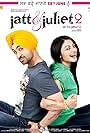
Following this setback, Anurag shifted his focus to Punjabi cinema, where he found remarkable success. His films Jatt & Juliet (2012) and Jatt & Juliet 2 (2013) not only emerged as major commercial hits but also redefined the landscape of Punjabi cinema, setting new benchmarks for storytelling, scale, and audience reach.
He further showcased his versatility by directing Punjab 1984 (2014), a film based on one of the darkest chapters in Punjab’s history. The film struck a deep emotional chord with audiences and went on to win the National Film Award, cementing his position as a filmmaker capable of blending commercial success with meaningful, hard-hitting narratives.
Anurag later returned to Hindi cinema with large-scale productions like Kesari (2019), starring Akshay Kumar. Based on the historic Battle of Saragarhi, the film was widely noted for its scale, performances, and emotional depth.
He further expanded his scale as a filmmaker by directing one of India’s biggest war films, Border 2. The film connected deeply with audiences across the country and went on to become one of the most significant war films in the history of Indian cinema.
Over the years, Anurag Singh has built a reputation for crafting stories that are visually grand yet emotionally grounded, often rooted in real-life events and culturally significant themes.
Born to professors Charan Singh Thind and Baljit Kaur, Anurag grew up in an academically driven environment. Although he pursued his higher secondary education in the medical stream, he chose to follow his passion for cinema and moved to Australia to study filmmaking.
After returning to Mumbai, he began his career as an assistant director under Raj Kanwar, working on films like Andaaz (2003) and Humko Deewana Kar Gaye (2006). He later made his directorial debut in Bollywood with Raqeeb (2007), starring Jimmy Sheirgill, Sharman Joshi, and Tanushree Dutta. The film received mixed-to-negative reviews and underperformed at the box office.
Following this setback, Anurag shifted his focus to Punjabi cinema, where he found remarkable success. His films Jatt & Juliet (2012) and Jatt & Juliet 2 (2013) not only emerged as major commercial hits but also redefined the landscape of Punjabi cinema, setting new benchmarks for storytelling, scale, and audience reach.
He further showcased his versatility by directing Punjab 1984 (2014), a film based on one of the darkest chapters in Punjab’s history. The film struck a deep emotional chord with audiences and went on to win the National Film Award, cementing his position as a filmmaker capable of blending commercial success with meaningful, hard-hitting narratives.
Anurag later returned to Hindi cinema with large-scale productions like Kesari (2019), starring Akshay Kumar. Based on the historic Battle of Saragarhi, the film was widely noted for its scale, performances, and emotional depth.
He further expanded his scale as a filmmaker by directing one of India’s biggest war films, Border 2. The film connected deeply with audiences across the country and went on to become one of the most significant war films in the history of Indian cinema.
Over the years, Anurag Singh has built a reputation for crafting stories that are visually grand yet emotionally grounded, often rooted in real-life events and culturally significant themes.