Siegfried Kracauer(1889-1966)
- Writer
Siegfried Kracauer (1889-1966) was a German sociologist, historian,
philosopher, cultural critic, film theorist, architect, novelist and
journalist. He wrote the first empirical study in German sociology and
is known as the founding father of the sociology of film. Born in 1889
in Frankfurt am Main, Kracauer first studied architecture from 1907 to
1913 and obtained a doctorate in engineering in 1914, but he only
worked as an architect until 1920. Between 1914 and 1918 sociology
professor Georg Simmel became a major influence for Kracauer's
intellectual development and in 1922 he published 'Sociology as a
Science'. Kracauer changed his profession and from 1922 to 1933 became
the film and literature editor of the highly respected
'Frankfurter Zeitung'. He worked in Berlin
alongside and was friends with leading intellectuals of the era like
Ernst Bloch, Leo Löwenthal, Erich Fromm
and Theodor W. Adorno. Kracauer's
regular contributions to the newspaper made him a well-known cultural
critique of the young Weimar Republic (1918-1933). In 1928 Kracauer
published his first novel
'Ginster' which was highly regarded by authors Joseph Roth
and Thomas Mann. In 1930 Kracauer
published
'Die Angestellten' which was acclaimed as an innovative sociological study and received rave reviews by Kurt Tucholsky
and Walter Benjamin. After the
Nazi-Party's rise to power and especially the 'Reichstagsbrand' in
February 1933, the Jewish-born Kracauer understood the dangerous
transformation of Weimar society and quickly left Germany for France,
where he continued to work in Paris mainly on historical topics like
his biography Jacques Offenbach und
das Paris seiner Zeit'(1937). In 1941 Kracauer finally emigrated to the
United States, leaving France right before the invading Nazi forces
arrived. From now on Kracauer only wrote in English and produced his
most influential books while working at the Museum of Modern Art in New
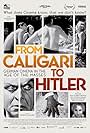
York. In 1947 'From Caligari to Hitler: A Psychological History of the
German Film' was published, an innovative study which traces the rise
of Nazism from the perspective of the cinema of the Weimar Republic.
This now classical cultural analysis became famous all over the world
and influenced film theory, the sociology of film and film criticism.
In 1960, Kracauer released his central work in film theory: 'Theory of
Film: The Redemption of Physical Reality', which argues that realism is
the most important function of cinema. In the last years of his life
Kracauer worked as a sociologist for different institutions, amongst
them as a director of research for applied social sciences at Columbia
University, while working on his major book on the philosophy of
history 'History - The Last Things Before the Last'. Kracauer died 1966
in New York and it was published 1969 in its unfinished form. A huge
part of Kracauer's work has been published posthumously and only has
become publicly available in recent years. Siegfried Kracauer's
importance as one of the earliest, most influential and most brilliant
writers on popular culture, film and society is widely recognized and
the astounding range of his work is now discovered by new generations
and new academic disciplines.