Rene Smaal
- Cinematographer
- Producer
- Editor
Rene Smaal is a Dutch independent filmmaker, cinematographer, director, and editor known for his minimalist, expressionist, and surrealist works. His films are characterized by a philosophical approach rooted in subjective idealism, influenced by George Berkeley's principle "esse est percipi" (to be is to be perceived).
In the 1980s, Smaal co-founded Sysyphus, an experimental film collective in the Netherlands that contributed to the vibrant era of Dutch avant-garde cinema. Decades later, in 2018, he co-founded the Open Filmmaking Network (originally called the Filmmaking Meetup), a non-profit collective based in Utrecht that serves as a breeding ground for independent filmmakers ranging from beginners to professionals.
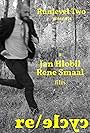
Smaal gained significant recognition with Re/cycle (2019), a 54-second experimental short filmed as a spontaneous single-take improvisation during a 45-minute break on another production. The minimalist film, featuring only a birch forest, an abandoned bicycle, and a man, screened at over 21 international festivals and won Best Experimental Short. As Smaal noted, the film taught him that "the most important things in life can occur when you open yourself to 'happy accidents.'"
His feature documentary Once Upon Amsterdam (2021) captures a day in the life of Amsterdam shortly after the turn of the millennium, presented without dialogue. The hour-long film won four awards and was produced on a budget of just EUR1,000, exemplifying Smaal's resourceful independent production methods.
Other notable works include The Pink Elephant (2021), a 5-minute short exploring themes of love and magic filmed in southern Italy, and Don't Touch! (2020), a horror short co-directed with Angelica Andersson that received two award nominations.
Smaal's films are produced through Runlevel Two Productions. He favors open-source software like Blender for editing and often serves simultaneously as director, cinematographer, editor, and producer. His work emphasizes natural lighting, wide-angle lenses, and minimalist compositions that invite viewers to construct their own interpretations. As he states: "In the film as well as in life in general, to me, it is not what you see and hear that matters, but how it is perceived."
In the 1980s, Smaal co-founded Sysyphus, an experimental film collective in the Netherlands that contributed to the vibrant era of Dutch avant-garde cinema. Decades later, in 2018, he co-founded the Open Filmmaking Network (originally called the Filmmaking Meetup), a non-profit collective based in Utrecht that serves as a breeding ground for independent filmmakers ranging from beginners to professionals.
Smaal gained significant recognition with Re/cycle (2019), a 54-second experimental short filmed as a spontaneous single-take improvisation during a 45-minute break on another production. The minimalist film, featuring only a birch forest, an abandoned bicycle, and a man, screened at over 21 international festivals and won Best Experimental Short. As Smaal noted, the film taught him that "the most important things in life can occur when you open yourself to 'happy accidents.'"
His feature documentary Once Upon Amsterdam (2021) captures a day in the life of Amsterdam shortly after the turn of the millennium, presented without dialogue. The hour-long film won four awards and was produced on a budget of just EUR1,000, exemplifying Smaal's resourceful independent production methods.
Other notable works include The Pink Elephant (2021), a 5-minute short exploring themes of love and magic filmed in southern Italy, and Don't Touch! (2020), a horror short co-directed with Angelica Andersson that received two award nominations.
Smaal's films are produced through Runlevel Two Productions. He favors open-source software like Blender for editing and often serves simultaneously as director, cinematographer, editor, and producer. His work emphasizes natural lighting, wide-angle lenses, and minimalist compositions that invite viewers to construct their own interpretations. As he states: "In the film as well as in life in general, to me, it is not what you see and hear that matters, but how it is perceived."