
Frederick Wiseman(1930-2026)
- Director
- Producer
- Editor

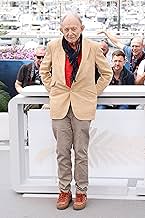
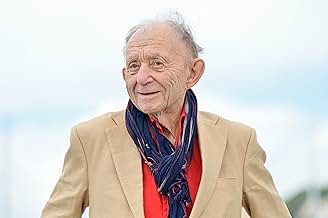
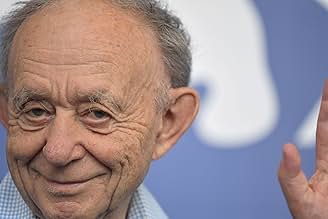
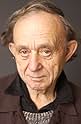
Frederick Wiseman was probably one of today's greatest documentary filmmakers. For close to thirty years, thanks to the Public Broadcast Service (PBS), he has created an exceptional body of work consisting of thirty full length films devoted primarily to exploring American institutions. The institutions that Wiseman examined early in his career - a hospital, a high school, army basic training, a welfare center, a police precinct - have "problems" that the filmmaker uncovers. His approach reveals the profound acknowledged and unacknowledged conformity and inequality of American society. Wiseman's films are also a reflection on democracy. What do his films portray, the "American dream" or the "air conditioned nightmare"? Both, but also a questioning of the world and of existence.
Occasionally, his films describe less circumscribed institutions - the world of fashion, a public park, and a ski resort. In addition to examining the social and ethical questions he is not afraid to confront the "big" metaphysical questions particularly in the films about handicapped children and dying patients. The filmmaker is trying to encompass all of human experience in his films. He had already made movies outside the borders of his own country, in the Sinai, in Germany, and in Panama. In each of these films, however, his subject was Americans abroad.
In 1993, in his film Ballet, he followed the American Ballet Theatre rehearsals in New York and performances in Europe. For a long time Wiseman had wanted to make a film in France. In 1995, he tackled that most French of institutions, The Comedie Francaise. Both in Ballet and La Comédie-Française Wiseman raises questions about the conditions necessary for artistic creation: how to create those conditions which allow a director, an actor, or a dancer to achieve the goal of a perfect even sublime performance; how the specific dialect for the theatre works, the dialect which both places in opposition and transcends the solitude of individual creation and group collaboration.
"Documentaries, like theatre pieces, novels or poems are forms of fiction", claimed Wiseman. Over the years, his films became a skillful mix of observation, testimony, reflection, an absence of prejudice, and courage, and humor.
Occasionally, his films describe less circumscribed institutions - the world of fashion, a public park, and a ski resort. In addition to examining the social and ethical questions he is not afraid to confront the "big" metaphysical questions particularly in the films about handicapped children and dying patients. The filmmaker is trying to encompass all of human experience in his films. He had already made movies outside the borders of his own country, in the Sinai, in Germany, and in Panama. In each of these films, however, his subject was Americans abroad.
In 1993, in his film Ballet, he followed the American Ballet Theatre rehearsals in New York and performances in Europe. For a long time Wiseman had wanted to make a film in France. In 1995, he tackled that most French of institutions, The Comedie Francaise. Both in Ballet and La Comédie-Française Wiseman raises questions about the conditions necessary for artistic creation: how to create those conditions which allow a director, an actor, or a dancer to achieve the goal of a perfect even sublime performance; how the specific dialect for the theatre works, the dialect which both places in opposition and transcends the solitude of individual creation and group collaboration.
"Documentaries, like theatre pieces, novels or poems are forms of fiction", claimed Wiseman. Over the years, his films became a skillful mix of observation, testimony, reflection, an absence of prejudice, and courage, and humor.








In Memoriam: Stars We Lost in 2026
In Memoriam: Stars We Lost in 2026
We pay tribute to the stars we lost this year, including Dolly Parton and Tim Curry.


