
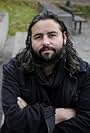
- Hoyte van Hoytema was born in Horgen, Switzerland. Van Hoytema is a Dutch-Swedish director of photography known for his work on The Fighter (2010), Her (2013), Interstellar (2014), and Dunkirk (2017). Van Hoytema always wanted to be a filmmaker and wished to attend a film school in The Netherlands, but was rejected twice. After the rejection, Van Hoytema worked in a soap factory, carpentry factory and even played in a band. Hoyte and his brother decided to go to Poland to visit their roots as their grandpa was Polish. He eventually went on to attend the Polish film school in Lodz, which has been attended by other notable filmmakers such as Andrzej Wajda, Roman Polanski, and Krzysztof Kieslowski. At the later stages of Hoyte's education at the Lodz film school, Kieslowski was a professor there and supervised one of Hoyte's last projects. Hoyte left the Lodz film school early without having received a degree, but with many credentials. He started out with making documentaries. He later met someone who asked him to shoot a very low-budget film in Norway, which he accepted. This led Hoyte to film another film in Norway, which was led by a a producer who was very active in Sweden. The producer offered Hoyte to work on a television show and another feature film, which started off Hoyte's career. He started to become a notable filmmaker in Sweden. His film 'Let the right one in' made him more known internationally.
- IMDb mini biography by: Roos Smit
- ChildrenChild
- Member of the Netherlands Society of Cinematographers (NSC), the Swedish Society of Cinematographers (Föreningen Sveriges Filmfotografer - FSF), and the American Society of Cinematographers (ASC) since 2016.
- As of 2024, he has contributed with the cinematography of four films that were nominated for the Best Picture Oscar: The Fighter (2010), Her (2013), Dunkirk (2017) and Oppenheimer (2023), with the latter being a winner in the category.
- Speaks Dutch, Swedish, Polish, and English.
- [on Dunkirk (2017)] We played around with the IMAX cameras a lot with Interstellar (2014) as well, and it's undeniably the best and most visceral format. It's the biggest negative, so it will harvest light and spread it out over the biggest amount of celluloid, which ultimately gives it the highest resolution - but also, with the experience of depth and color rendition, there's nothing like it right now.
- [on working with Christopher Nolan] Making films with him is real filmmaking to me. It's very hands-on and it's a lot of engineering, always. It's really switching your mind on to a very classic, visceral way of filmmaking. Nobody makes film like him. I think it's healthy for me as a cinematographer to try to sometimes do some different things in between projects, as well, so I don't expect people to be like him. Our relationship is unique, but there's a lot of opportunity, you know?
- [on shooting Interstellar (2014) on IMAX] I have to say I love big format. I always loved medium format photography for instance. It's exposing a bigger negative. It's not only that the definition and color rendering is beautiful but also, it creates this very beautiful short depth of field. So it's the most pristine format you can have but at the same time it's so textured because of the way the lens is rendered on a negative that big. So getting the IMAX camera was very nice.
- I have to say I love film above all. I have the most affinity with celluloid and I feel most comfortable shooting that. But the whole thing about film versus digital, I mean the biggest mistake with it is that it's always presented as film versus digital. I don't think that one thing rules out the other and I don't think that one thing is better than the other.
Contribute to this page
Suggest an edit or add missing content
