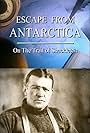
Robert Falcon Scott(1868-1912)

Captain Robert Falcon Scott was an English explorer who commanded two Antarctic expeditions, the 'Discovery' expedition of 1901-04 and the ill-fated 'Terra Nova' expedition of 1910-13.
Born into a naval family, he was the son of John and Hannah Scott. Robert Falcon became a cadet at the age of 13 and entered the navy in 1882.
He married famous English sculptor, Kathleen Bruce in 1908. Their son Peter was born in 1909.
In 1910 he set for Antarctica on the ship 'Terra Nova' and he set a new southern record by marching to latitude 82°S and discovered the Antarctic Plateau, on which the South Pole is located.
On the second venture, Scott led a party of five which reached the South Pole on 17 January 1912, less than five weeks after Amundsen's South Pole expedition. With Scott on the final expedition were Edward Wilson, Laurence Oates, H R Bowers, and E Evans. On the return journey from the Pole, a planned meeting with supporting dog teams from the base camp failed, despite Scott's written instructions, and at a distance of 162 miles (261 km) from their base camp at Hut Point and approximately 12.5 miles (20.1 km) from the next depot, Scott and his companions died. When Scott and his party's bodies were discovered, they had in their possession the first Antarctic fossils discovered. The fossils were determined to be from the Glossopteris tree and proved that Antarctica was once forested and joined to other continents.
Before his appointment to lead the 'Discovery' expedition, Scott had a career as a Royal Navy officer. In 1899, he had a chance encounter with Sir Clements Markham, the president of the Royal Geographical Society (RGS), and learned of a planned Antarctic expedition, which he soon volunteered to lead. His name became inseparably associated with the Antarctic, the field of work to which he remained committed during the final years of his life. The Scott Polar Research Institute in Cambridge was founded in 1920 out of funds donated by the public following Scott's death, as a memorial to him and his companions. It houses a small museum and library, and carries out research into all aspects of the Antarctic and Arctic regions.
Born into a naval family, he was the son of John and Hannah Scott. Robert Falcon became a cadet at the age of 13 and entered the navy in 1882.
He married famous English sculptor, Kathleen Bruce in 1908. Their son Peter was born in 1909.
In 1910 he set for Antarctica on the ship 'Terra Nova' and he set a new southern record by marching to latitude 82°S and discovered the Antarctic Plateau, on which the South Pole is located.
On the second venture, Scott led a party of five which reached the South Pole on 17 January 1912, less than five weeks after Amundsen's South Pole expedition. With Scott on the final expedition were Edward Wilson, Laurence Oates, H R Bowers, and E Evans. On the return journey from the Pole, a planned meeting with supporting dog teams from the base camp failed, despite Scott's written instructions, and at a distance of 162 miles (261 km) from their base camp at Hut Point and approximately 12.5 miles (20.1 km) from the next depot, Scott and his companions died. When Scott and his party's bodies were discovered, they had in their possession the first Antarctic fossils discovered. The fossils were determined to be from the Glossopteris tree and proved that Antarctica was once forested and joined to other continents.
Before his appointment to lead the 'Discovery' expedition, Scott had a career as a Royal Navy officer. In 1899, he had a chance encounter with Sir Clements Markham, the president of the Royal Geographical Society (RGS), and learned of a planned Antarctic expedition, which he soon volunteered to lead. His name became inseparably associated with the Antarctic, the field of work to which he remained committed during the final years of his life. The Scott Polar Research Institute in Cambridge was founded in 1920 out of funds donated by the public following Scott's death, as a memorial to him and his companions. It houses a small museum and library, and carries out research into all aspects of the Antarctic and Arctic regions.