
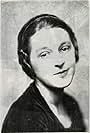
- Born
- Died
- Birth nameCharlotte Reiniger
- Reiniger's parents were Carl Reiniger and Eleonore Lina Wilhelmine Rakette. She grew up the Charlottenburg district of Berlin and attended Charlottenburger Waldschule, the first open-air school, where she learned the art of scherenschnitte, the German art of silhouette, inspired by the ancient Chinese art of paper cutting and silhouette puppetry. In 1915, her love of theater led Reiniger to her future mentor and colleague Paul Wegener when she attended a lecture by Wegener that focused on the fantastic possibilities of animation. She enrolled in the acting group to which Wegener belonged, the Theatre of Max Reinhardt. She began by making costumes and props and working backstage for Wegener's play productions. In 1918, Reiniger animated wooden rats and created the animated intertitles for Wegener's "The Pied Piper of Hamelin." The success of this work got her admitted into the Institute for Cultural Research, an experimental animation and short-film studio. It was here that she met her future creative partner and husband (from 1921), Carl Koch, as well as other avant-garde artists including Bertolt Brecht. The first film Reiniger directed was "The Ornament of the Enamoured Heart," a five-minute piece involving two lovers and an ornament that reflects their moods. This earned her great success and she began to make many more short films. With the help of financier Louis Hagen, she eventually made the feature-length animated "The Adventures of Prince Achmed," which remains the oldest surviving feature-length animated film in history. With the rise of the Nazi Party, Reiniger and Koch decided to emigrate (both were involved in left-wing politics), but found that no other country would give them permanent visas. As a result, the couple spent the years 1933-1944 moving from country to country, staying as long as visas would allow. With the release of sound film, Reiniger and her husband began to work with music in relation to animation. They worked with filmmakers such as Jean Renoir and Luchino Visconti. When World War II commenced they stayed with Visconti in Rome until 1944, then moved back to Berlin to take care of Reiniger's sick mother. Under the rule of Hitler, Reiniger was forced to make propaganda films for Germany. In 1949, Reiniger and Koch moved to London, where she made a few short advertising films for John Grierson and his General Post Office Film Unit (later to be renamed the "Crown Film Unit"). By 1953, Reiniger had founded Primrose Production with Louis Hagen Jr., the son of the financier of "Prince Achmed." With this company, she made over a dozen short silhouette films based on Grimms’ Fairy Tales for the BBC and Telecasting America. Reiniger continued to work on and off over the years, her last film being "The Rose and the Ring," released in 1979.
- IMDb mini biography by: John-the-Turnip-Head
- SpouseCarl Koch(December 6, 1921 - December 1, 1963) (his death)
- Black and white silhouette animation
- German animator, a pioneer in silhouette cartoons whose work was based on the traditions of the oriental shadow theatre. Started with the Max Reinhardt Theatre Company in the late 1910s. Made her first full-length animated feature, The Adventures of Prince Achmed (1926). During the 1930's, worked in Canada and in Britain (for the GPO Film Unit). Most of her output consisted of short films. Among many shadow plays for the BBC, she turned out her first silhouette color work with Jack and the Beanstalk (1956). She absented herself from the cinema for ten years following the death of her husband and collaborator, Carl Koch. In her later years, she lectured in shadow animation in Europe and the US.
- Designed an early form of the multi-plane camera, which would go on to be one of the most important inventions in animation history after it was adopted by Walt Disney.
Contribute to this page
Suggest an edit or add missing content
