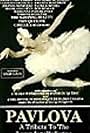
Anna Pavlova(1881-1931)
- Actress
- Choreography

Anna Pavlovna Pavlova was born on February 12, 1881, in Ligovo, near
St. Petersburg, Russia. She was an illegitimate daughter to parents
of a Russian-Jewish background. Her real father was a wealthy
businessman named Lazar Polyakov. Her mother, Lyubov Fedorovna
Pavlova, was a poor peasant. Her mother's husband, Mathwey
(Mathew) Pavlov, was a retired soldier, who died when Anna was only two
years old. Although she was registered under the name of Pavlova, her
father Lazar Polyakov took good care of young Anna and also
paid for her tuition at the Imperial Ballet School in St. Petersburg.
Young Anna Pavlova was raised by her grandmother at her villa in Ligovo, an upscale suburb of St. Petersburg. There she became acquainted with aristocratic society and attended ballet performances at the Imperial Mariinsky Theatre. From a young age, Pavlova had a dream of becoming a ballerina but she was rejected at the age of eight and practiced at home for two years. At the age of 10 she auditioned again and was admitted by Marius Petipa to the ballet class at the Imperial Ballet school in St. Petersburg. There she practiced ballet routines for eight hours daily and also studied music, having perfect pitch. As a ballet student, Pavlova adopted a strict diet with emphasis on fish and vegetables and followed that diet throughout her life. She lived at the boarding school of the Imperial Ballet until her graduation at the age of 18. Tamara Karsavina and 'Matilda Kshesinskaya' were among her classmates. Pavlova made her debut on September 19, 1899 and worked with the Mariinsky Ballet from 1899 to 1907. She shared the role of Gizelle with 'Matilda Kshesinskaya'. Her partner and choreographer was Mikhail Fokin. He choreographed Pavlova's best known showpiece "The Dying Swan" on the music of Camille Saint-Saëns. In 1908, Sergei Diaghilev hired Pavlova and Mikhail Fokin for his "Ballets Russes" (Russian Seasons) in Paris and London.
In 1904, Anna Pavlova met Victor D'Andre, a French-Russian aristocrat, who loved her at once. D'Andre was a businessman in St. Petersburg. At one time he was accused of embezzlement and imprisoned. Pavlova bailed him out of prison, then paid all his debts and legal expenses. D'Andre and Pavlova privately married in 1911. Victor D'Andre became her impresario and they formed a touring ballet troupe. In 1912 Pavlova and D'Andre bought Ivy House, Golders Green in Hampstead, London, which was their home for the rest of her life. On her expensive estate Pavlova kept a pond with swans, alluding to her favourite role. At her home Pavlova established a dance school which catered to her touring troupe. Initially her troupe had only eight Russian dancers. Later, with the growing success and popularity of Anna Pavlova, her troupe grew to sixty dancers and staff, all managed by D'Andre.
Pavlova made her Metropolitan Opera House debut in 1910, and toured America and Europe before her brief final return to Russia. She made her last appearance in St. Petersburg in 1913 and spent the rest of her life on tour. Pavlova toured all over the world including Europe, Asia, North and Central America, and Australia. Pavlova was able to make eight to nine performances per week and had a great interest in performing for inexperienced audiences in remote rural areas around the world. Her performances in Mexico, India, Japan and Australia were legendary. She was overworked and exhausted by her late 40s, but still danced vigorously. She gave over four thousand ballet performances during the years between 1913-1930. In January of 1931, Pavlova contracted double pneumonia on a train to Haage and her condition deteriorated rapidly. Dying, she looked at her swan costume. She died on January 23, 1931, in Haage, Netherlands. Her remains were buried in the Novodevichy Convent Cemetery in Moscow, Russia.
Pavlova's infinite finesse, delicacy and emotional dimension were captured by artist Valentin Serov, who painted her famous 1909 life-size portrait. Pavlova is depicted in her favorite role as a white swan on a blue background.
Young Anna Pavlova was raised by her grandmother at her villa in Ligovo, an upscale suburb of St. Petersburg. There she became acquainted with aristocratic society and attended ballet performances at the Imperial Mariinsky Theatre. From a young age, Pavlova had a dream of becoming a ballerina but she was rejected at the age of eight and practiced at home for two years. At the age of 10 she auditioned again and was admitted by Marius Petipa to the ballet class at the Imperial Ballet school in St. Petersburg. There she practiced ballet routines for eight hours daily and also studied music, having perfect pitch. As a ballet student, Pavlova adopted a strict diet with emphasis on fish and vegetables and followed that diet throughout her life. She lived at the boarding school of the Imperial Ballet until her graduation at the age of 18. Tamara Karsavina and 'Matilda Kshesinskaya' were among her classmates. Pavlova made her debut on September 19, 1899 and worked with the Mariinsky Ballet from 1899 to 1907. She shared the role of Gizelle with 'Matilda Kshesinskaya'. Her partner and choreographer was Mikhail Fokin. He choreographed Pavlova's best known showpiece "The Dying Swan" on the music of Camille Saint-Saëns. In 1908, Sergei Diaghilev hired Pavlova and Mikhail Fokin for his "Ballets Russes" (Russian Seasons) in Paris and London.
In 1904, Anna Pavlova met Victor D'Andre, a French-Russian aristocrat, who loved her at once. D'Andre was a businessman in St. Petersburg. At one time he was accused of embezzlement and imprisoned. Pavlova bailed him out of prison, then paid all his debts and legal expenses. D'Andre and Pavlova privately married in 1911. Victor D'Andre became her impresario and they formed a touring ballet troupe. In 1912 Pavlova and D'Andre bought Ivy House, Golders Green in Hampstead, London, which was their home for the rest of her life. On her expensive estate Pavlova kept a pond with swans, alluding to her favourite role. At her home Pavlova established a dance school which catered to her touring troupe. Initially her troupe had only eight Russian dancers. Later, with the growing success and popularity of Anna Pavlova, her troupe grew to sixty dancers and staff, all managed by D'Andre.
Pavlova made her Metropolitan Opera House debut in 1910, and toured America and Europe before her brief final return to Russia. She made her last appearance in St. Petersburg in 1913 and spent the rest of her life on tour. Pavlova toured all over the world including Europe, Asia, North and Central America, and Australia. Pavlova was able to make eight to nine performances per week and had a great interest in performing for inexperienced audiences in remote rural areas around the world. Her performances in Mexico, India, Japan and Australia were legendary. She was overworked and exhausted by her late 40s, but still danced vigorously. She gave over four thousand ballet performances during the years between 1913-1930. In January of 1931, Pavlova contracted double pneumonia on a train to Haage and her condition deteriorated rapidly. Dying, she looked at her swan costume. She died on January 23, 1931, in Haage, Netherlands. Her remains were buried in the Novodevichy Convent Cemetery in Moscow, Russia.
Pavlova's infinite finesse, delicacy and emotional dimension were captured by artist Valentin Serov, who painted her famous 1909 life-size portrait. Pavlova is depicted in her favorite role as a white swan on a blue background.