Larry O'Reilly
- Director
- Cinematographer
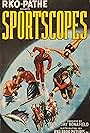
Director and cameraman responsible for "Arctic Passage," "Letter to a Hero," "That Men May Live" and many other of RKO's "This Is America" short subjects, O’Reilly hailed from Brooklyn, and was a professional photographer since 1918, free-lancing at the start.
His first newsreel assignment came in 1927 when he made the first interior films of the West Point graduation. A roving cameraman in the U.S. and Canada, he served for five and one-half months in Paris and in various parts of the continent for Pathé News. An energetic lad, O'Reilly at one time set up a laboratory in his hotel room. From this lab, he covered local news stories, developed his own negative, printed, edited and titled the film, then rushed the finished product to local theaters to score a "beat" over his competitors.
O’Reilly went to England and France to gather on-the-spot material for That Men May Live (1944), the story of the overseas work of the Red Cross. He outlined the script, shot the picture and then brought it back to the U.S. for cutting and narration.
His first newsreel assignment came in 1927 when he made the first interior films of the West Point graduation. A roving cameraman in the U.S. and Canada, he served for five and one-half months in Paris and in various parts of the continent for Pathé News. An energetic lad, O'Reilly at one time set up a laboratory in his hotel room. From this lab, he covered local news stories, developed his own negative, printed, edited and titled the film, then rushed the finished product to local theaters to score a "beat" over his competitors.
O’Reilly went to England and France to gather on-the-spot material for That Men May Live (1944), the story of the overseas work of the Red Cross. He outlined the script, shot the picture and then brought it back to the U.S. for cutting and narration.