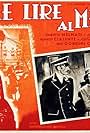
Niní Gordini Cervi(1907-1988)
- Actress
Niní Gordini Cervi, born Angela Rosa Gordini, was an Italian actress. From an early age she was drawn to the world of performance, guided less by ambition than by a quiet, persistent calling. At eighteen she made her first entrance onto the stage with a small local theatre company, an experience that marked the true beginning of her life in the arts. It was within this early theatrical environment that she encountered Gino Cervi - at the time a promising young actor, destined to become one of the central figures of Italian theatre - and in 1928 their artistic companionship became a marriage.
Her path through the theatrical world led her from Kiki Palmer’s company to those of Renzo Ricci and Romano Calò, where she shared the stage with performers such as Sergio Tofano and Evi Maltagliati, and often with Cervi himself. She achieved her first major success in 1934 with Esami di maturità (High School Exams), adapted from a play by Ladislao Fodor. Two years later she joined the company of the Teatro Eliseo in Rome, under the direction of her husband, remaining there until 1939 - years marked by intense work, artistic discipline, and a deepening sense of craft. She would later collaborate with the De Sica, Rissone and Melnati companies, continuing to move gracefully within the Italian theatrical landscape.
Her presence in cinema was more discreet, almost reflective - a gallery of supporting and character roles rather than starring parts - yet always imbued with delicacy and depth. From her film debut in 1932 until 1943, she appeared in eight productions, including two alongside Alida Valli, one of the icons of the period. Beginning in 1937, she also turned to radio drama for EIAR under the direction of Romano Calò, and to dubbing, where the nuance of her voice became another instrument of expression.
Her performance in Mario Mattoli’s Stasera niente di nuovo (Nothing New Tonight, 1942) is often regarded as the most intense of her screen interpretations - a role in which restraint and emotion found a rare balance. Two years later, in 1944, she chose to withdraw from the stage and screen, partly to devote herself to her son Tonino, the only child of her marriage, who would go on to become a film director and producer.
Niní Gordini Cervi now rests beside him - and beside the husband with whom she shared both art and life - in Rome’s Flaminio Cemetery, her story inseparable from the world of Italian theatre to which she devoted her youth and talent.
Her path through the theatrical world led her from Kiki Palmer’s company to those of Renzo Ricci and Romano Calò, where she shared the stage with performers such as Sergio Tofano and Evi Maltagliati, and often with Cervi himself. She achieved her first major success in 1934 with Esami di maturità (High School Exams), adapted from a play by Ladislao Fodor. Two years later she joined the company of the Teatro Eliseo in Rome, under the direction of her husband, remaining there until 1939 - years marked by intense work, artistic discipline, and a deepening sense of craft. She would later collaborate with the De Sica, Rissone and Melnati companies, continuing to move gracefully within the Italian theatrical landscape.
Her presence in cinema was more discreet, almost reflective - a gallery of supporting and character roles rather than starring parts - yet always imbued with delicacy and depth. From her film debut in 1932 until 1943, she appeared in eight productions, including two alongside Alida Valli, one of the icons of the period. Beginning in 1937, she also turned to radio drama for EIAR under the direction of Romano Calò, and to dubbing, where the nuance of her voice became another instrument of expression.
Her performance in Mario Mattoli’s Stasera niente di nuovo (Nothing New Tonight, 1942) is often regarded as the most intense of her screen interpretations - a role in which restraint and emotion found a rare balance. Two years later, in 1944, she chose to withdraw from the stage and screen, partly to devote herself to her son Tonino, the only child of her marriage, who would go on to become a film director and producer.
Niní Gordini Cervi now rests beside him - and beside the husband with whom she shared both art and life - in Rome’s Flaminio Cemetery, her story inseparable from the world of Italian theatre to which she devoted her youth and talent.