
- Born
- Died
- Birth nameGeorge Scott Barnes
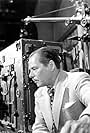
- Veteran cinematographer George S. Barnes had a well-earned reputation for reliability and a knack for combining artistry with economic efficiency. As a result, he was seldom out of work.
Having started as a still photographer for Thomas H. Ince in 1918, Barnes quickly rose through the ranks to director of photography. In the course of his career he spent time at just about every major studio in Hollywood: Paramount (1919-21), Metro (1924-25), United Artists (1926-31), MGM (1932), Warner Brothers (1933-38), 20th Century-Fox (1940-41), Universal (1942) and RKO (1942-48). During the 1920s he was the primary cinematographer for Samuel Goldwyn and was largely responsible for the success of films like The Dark Angel (1925). Under his auspices Gregg Toland learned his craft, particularly Barnes' trademark soft-edged, deep-focus photography and intuitive composition and camera movement. Barnes was an expert at lighting. He often utilized curtains or reflective surfaces to create patterns of light and shade. Most importantly, he perfectly suited the required style of photography to each individual assignment. He brought a vivid opulence to the dullish Technicolor romance Frenchman's Creek (1944), making it a triumph of style over content. His 'catoon colors' were just as perfectly suited to the fantasy adventure Sinbad, the Sailor (1947). At Warner Brothers the dark, somewhat grainy texture of films like Marked Woman (1937) was in sync with the realistic look the studio wanted to achieve for its product. He also excelled at shooting vivid dramatic scenes, such as the flood sequences featured in The Winning of Barbara Worth (1926).
Barnes did his best work in the 1940s, shooting two classic Alfred Hitchcock thrillers: for Rebecca (1940) he created an atmosphere of sinister foreboding, right from the beginning, with his shots of Manderley (Barnes was hired because Toland was unavailable, but he ended up winning an Academy Award); and Spellbound (1945), with its unsettling surrealist Salvador Dalí-designed dream sequence of wheels, eyes and staircases. A lesser, but nonetheless good-looking, addition to Barnes' resume is a minor film noir, The File on Thelma Jordon (1949). In contrast, he created a suitably lavish look for his color photography, which enlivened two charismatic swashbuckling adventures, The Spanish Main (1945) and Sinbad, the Sailor (1947). Popular with directors and producers (though he was once fired by David O. Selznick for failing to bring the best out of Jennifer Jones) and stars (Bing Crosby) alike, Barnes was continually employed until his death in 1953. He was also popular with the ladies, to which his seven marriages testify. One of his wives was the actress Joan Blondell.
- IMDb mini biography by: I.S.Mowis
- SpousesMargaret Atkinson(June 9, 1947 - May 30, 1953) (his death)Melba Marshall(1939 - 1945) (divorced, 2 children)Betty Wood(September 13, 1936 - May 11, 1938) (divorced, 1 child)Joan Blondell(January 4, 1933 - September 4, 1936) (divorced, 1 child)Marie Namara(February 15, 1926 - December 1932) (divorced)Ethel Johnson(March 13, 1923 - March 23, 1923) (divorced)Helen Howell(January 27, 1915 - ?) (divorced)
- Children
- He had a child, Norman S. Powell, with Joan Blondell. He gave up parental rights to Norman in 1938, when Blondell's new husband Dick Powell adopted him.
- Married seven times.
- Cinematographer for two Oscar Best Picture winners Rebecca (1940) and The Greatest Show on Earth (1952), and four other nominees: Flirtation Walk (1934), Since You Went Away (1944), Spellbound (1945) and The Bells of St. Mary's (1945).
- His son, George Carlton Barnes, with Elizabeth Wood was born on December 18, 1937.
- The Awakening (1928) - $500 per week
Contribute to this page
Suggest an edit or add missing content
