Roy Budd(1947-1993)
- Music Department
- Composer
- Actor
Born on the 14th March, 1947, Roy Budd the musician was entirely
self-taught, and was hailed as a child prodigy. At the age of four he
began to play the piano, initially by ear and then by copying various
melodies he heard by listening to the radio. By the age of six he had
appeared in public at The London Coliseum, at eight he had mastered a
Wurlitzer organ and four years later was appearing on television, and
before Royalty at The London Palladium. On the latter occasion, he was
apparently so nervous that his piano solo was over at least a minute
before the accompanying orchestra had finished!
During his teens he developed a taste for jazz and formed The Roy Budd Trio, with bassist Pete Morgan and drummer Chris Karan. On leaving school at the age of sixteen, he embarked on a professional career as a jazz pianist and was so successful he won a UK jazz poll in the category of best pianist for five years running. At the same time he became the resident pianist at the Bull's Head, Barnes, London and met up with songwriter Jack Fishman. Fishman was so impressed with his musical ability that he secured him a three-year recording contract with MCA, and although the company used their option to drop him after only a year, Fishman bet the MD that Budd would become an internationally renowned writer of film music - a bet he was soon to win.
In 1970, Budd duly made his début in the world of film music, but this was achieved in rather unusual circumstances. Hearing that director Ralph Nelson was looking for an English composer for his controversial film, Soldier Blue (1970), he was so keen to get the assignment, he put together a tape consisting of music composed by such greats as Jerry Goldsmith, John Williams, Max Steiner, Dimitri Tiomkin and Lalo Schifrin, and sent it off to Nelson, with the claim that it was all his own work! Shrewdly, he didn't pick any of these composer's main themes, in case of arousing the director's suspicion, and, not surprisingly he got the job. Soldier Blue was filmed mainly in Mexico and was based to a large degree on a battle which took place at Sand Creek in 1864, when hundreds of Cheyenne Indians were brutally killed. Ironically, despite being intended as an 'anti-violence' Western, with the action showing the futility and horror of war, the film was heavily criticised for its violence - particularly the gory opening which was exceeded in blood-shed only by the climax. Apart from the main theme, which he based on Buffy Sainte-Marie's hit song of the same title, he composed all the music required for the film, but then encountered his second major difficulty. At the recording sessions, he found himself expected to conduct the 65-piece Royal Philharmonic Orchestra - a far cry from his jazz-club experiences! However, he followed the advice offered by Fishman, which was to never look back to the control room, and his first assignment was successfully completed.
The acclaim with which his score for Soldier Blue was greeted, led to many more opportunities in the genre, and during the following year he was able to score another six films. The first of these - Flight of the Doves (1971) - was, like Soldier Blue, directed by Ralph Nelson, but there was nothing controversial about this sentimental film, in which Ron Moody and Jack Wild were re-united following their huge impact together in Oliver! (1968). Next up for Budd was the score for a film which has since become something of a cult. Written and directed by Mike Hodges, Get Carter (1971) starred Michael Caine, John Osborne and Ian Hendry in a thoroughly violent story of a London based racketeer aiming to avenge his brother's death at the hands of Northern gangsters. Budd's music admirably suited the mood of the film, particularly his main theme, which incorporated the sounds of Caine's train journey to Newcastle. The film's budget reputedly allowed only 450 pounds for the score, but he overcame this restriction by using only three musicians, including Budd himself playing electric piano and harpsichord simultaneously.
Budd's innovative method of using the film's sound effects to complement his music, continued with Zeppelin (1971). Set during the First World War, this story of an attempt by the British to steal the secrets behind the infamous German airship was noted for its special effects. On this occasion, Budd took advantage of the distinctive sound of the Zeppelin's diesel-powered engine to introduce his own stirring main theme. When producer Euan Lloyd signed him to score the Western, Catlow (1971), it proved to be the start of an enduring relationship According to Lloyd, it was the film's director, former actor Sam Wanamaker who wanted Budd for the music, having been very impressed with his work on Soldier Blue. Lloyd was not familiar with his work but was able to find an Elstree cinema that were showing the film, some time after its release, and despite a poor sound system in the cinema, he heard enough to convince him that Wanamaker's judgement was sound. Catlow, the first of six films (Paper Tiger (1975), The Wild Geese (1978), The Sea Wolves (1980), The Final Option (1982) and Wild Geese II (1985) were the others) on which Budd worked with Lloyd, starred Yul Brynner in the title role, Leonard Nimoy as bounty hunter Miller, who is set on hounding Catlow to his death, and Richard Crenna as Ben Cowan - once on the opposite side to Catlow in the American Civil War, but now his friend and partner. An authorised recording of the musical soundtrack, consisting of just seven cues, was released only in Japan, but Budd's main theme was also recorded for Pye Records.
The Magnificent Seven Deadly Sins (1971) was produced and directed by comedian Graham Stark. This film apparently had all the right credentials for box-office success, its writers including those with vast previous success on television, together with a cast consisting of the cream of British comedy actors. Despite all this, however, the film didn't exactly set the box-office alight, being more of a series of sketches - not all of them new - than a complete story-line. Just two cuts of Roy Budd's score, which was co-written with Jack Fishman, found their way onto record - 'Envy, Greed An' Gluttony' and 'Lust'. Something to Hide (1972) was written and directed by Alistair Reid based on the original novel by Nicholas Monsarrat, and starred Peter Finch as Harry; a civil servant who kills and buries his wife, then goes slowly to pieces. Budd once again teamed up with Jack Fishman for the music, but his magnificent 'Concerto For Harry' was entirely his own composition and was the saving grace of a rather forgettable film.
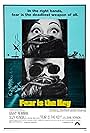
Fear Is the Key (1972) was a faithful film version of an Alistair MacLean novel, directed by Michael Tuchner, starring Suzy Kendall, Barry Newman, John Vernon, Ben Kingsley and Ray McAnally. The story-line was about a man who lays an elaborate plot to track down the killers of his wife and children, who die in a plane crash. When recording the score, Budd returned to his jazz roots by engaging the services of players of the calibre of Ronnie Scott, Tubby Hayes and Kenny Baker. In fact, it was Scott, the legendary jazz-club owner, who played solo sax for the lengthy car chase sequence which took place alongside the Mississippi River. According to director Tuchner, this sequence needed to be recorded in a continuous ten minute plus take, whilst hitting split-second action cues so as to blend perfectly with the chase sound effects. Budd and his orchestra achieved this (on "Car Chase") in just two takes!
During the remainder of the seventies, Budd continued to work on films of widely different style and nature, which gave him the opportunity to utilise his considerable gift for diversity. Outstanding amongst these were The Stone Killer (1973), The Destructors (1974) and The Black Windmill (1974) (two more Michael Caine films), Sinbad and the Eye of the Tiger (1977) and the aforementioned Paper Tiger and The Wild Geese.
Moving on to the eighties, his film work also included the scores for Mama Dracula (1980) and Field of Honor (1986), but he didn't restrict himself to this genre. Returning to his first love, he played regular jazz gigs at 'Duke's Bar' in Marylebone, London; as well as partnering veteran harmonica player Larry Adler. He also arranged for and accompanied such artists as Bob Hope, Tony Bennett, Charles Aznavour and Caterina Valente (who became his first wife) in concerts all around the world. But perhaps his most ambitious project was that completed shortly before his death. His symphonic score for the 1925 silent film classic - The Phantom of the Opera (1925)
Roy Budd died from a brain haemorrhage on the 7th August 1993 at the tragically early age of 46. Fortunately for devotees of film music, during a relatively short career he managed to cram in over fifty films, several of which found their way onto LPs and latterly CDs.
During his teens he developed a taste for jazz and formed The Roy Budd Trio, with bassist Pete Morgan and drummer Chris Karan. On leaving school at the age of sixteen, he embarked on a professional career as a jazz pianist and was so successful he won a UK jazz poll in the category of best pianist for five years running. At the same time he became the resident pianist at the Bull's Head, Barnes, London and met up with songwriter Jack Fishman. Fishman was so impressed with his musical ability that he secured him a three-year recording contract with MCA, and although the company used their option to drop him after only a year, Fishman bet the MD that Budd would become an internationally renowned writer of film music - a bet he was soon to win.
In 1970, Budd duly made his début in the world of film music, but this was achieved in rather unusual circumstances. Hearing that director Ralph Nelson was looking for an English composer for his controversial film, Soldier Blue (1970), he was so keen to get the assignment, he put together a tape consisting of music composed by such greats as Jerry Goldsmith, John Williams, Max Steiner, Dimitri Tiomkin and Lalo Schifrin, and sent it off to Nelson, with the claim that it was all his own work! Shrewdly, he didn't pick any of these composer's main themes, in case of arousing the director's suspicion, and, not surprisingly he got the job. Soldier Blue was filmed mainly in Mexico and was based to a large degree on a battle which took place at Sand Creek in 1864, when hundreds of Cheyenne Indians were brutally killed. Ironically, despite being intended as an 'anti-violence' Western, with the action showing the futility and horror of war, the film was heavily criticised for its violence - particularly the gory opening which was exceeded in blood-shed only by the climax. Apart from the main theme, which he based on Buffy Sainte-Marie's hit song of the same title, he composed all the music required for the film, but then encountered his second major difficulty. At the recording sessions, he found himself expected to conduct the 65-piece Royal Philharmonic Orchestra - a far cry from his jazz-club experiences! However, he followed the advice offered by Fishman, which was to never look back to the control room, and his first assignment was successfully completed.
The acclaim with which his score for Soldier Blue was greeted, led to many more opportunities in the genre, and during the following year he was able to score another six films. The first of these - Flight of the Doves (1971) - was, like Soldier Blue, directed by Ralph Nelson, but there was nothing controversial about this sentimental film, in which Ron Moody and Jack Wild were re-united following their huge impact together in Oliver! (1968). Next up for Budd was the score for a film which has since become something of a cult. Written and directed by Mike Hodges, Get Carter (1971) starred Michael Caine, John Osborne and Ian Hendry in a thoroughly violent story of a London based racketeer aiming to avenge his brother's death at the hands of Northern gangsters. Budd's music admirably suited the mood of the film, particularly his main theme, which incorporated the sounds of Caine's train journey to Newcastle. The film's budget reputedly allowed only 450 pounds for the score, but he overcame this restriction by using only three musicians, including Budd himself playing electric piano and harpsichord simultaneously.
Budd's innovative method of using the film's sound effects to complement his music, continued with Zeppelin (1971). Set during the First World War, this story of an attempt by the British to steal the secrets behind the infamous German airship was noted for its special effects. On this occasion, Budd took advantage of the distinctive sound of the Zeppelin's diesel-powered engine to introduce his own stirring main theme. When producer Euan Lloyd signed him to score the Western, Catlow (1971), it proved to be the start of an enduring relationship According to Lloyd, it was the film's director, former actor Sam Wanamaker who wanted Budd for the music, having been very impressed with his work on Soldier Blue. Lloyd was not familiar with his work but was able to find an Elstree cinema that were showing the film, some time after its release, and despite a poor sound system in the cinema, he heard enough to convince him that Wanamaker's judgement was sound. Catlow, the first of six films (Paper Tiger (1975), The Wild Geese (1978), The Sea Wolves (1980), The Final Option (1982) and Wild Geese II (1985) were the others) on which Budd worked with Lloyd, starred Yul Brynner in the title role, Leonard Nimoy as bounty hunter Miller, who is set on hounding Catlow to his death, and Richard Crenna as Ben Cowan - once on the opposite side to Catlow in the American Civil War, but now his friend and partner. An authorised recording of the musical soundtrack, consisting of just seven cues, was released only in Japan, but Budd's main theme was also recorded for Pye Records.
The Magnificent Seven Deadly Sins (1971) was produced and directed by comedian Graham Stark. This film apparently had all the right credentials for box-office success, its writers including those with vast previous success on television, together with a cast consisting of the cream of British comedy actors. Despite all this, however, the film didn't exactly set the box-office alight, being more of a series of sketches - not all of them new - than a complete story-line. Just two cuts of Roy Budd's score, which was co-written with Jack Fishman, found their way onto record - 'Envy, Greed An' Gluttony' and 'Lust'. Something to Hide (1972) was written and directed by Alistair Reid based on the original novel by Nicholas Monsarrat, and starred Peter Finch as Harry; a civil servant who kills and buries his wife, then goes slowly to pieces. Budd once again teamed up with Jack Fishman for the music, but his magnificent 'Concerto For Harry' was entirely his own composition and was the saving grace of a rather forgettable film.
Fear Is the Key (1972) was a faithful film version of an Alistair MacLean novel, directed by Michael Tuchner, starring Suzy Kendall, Barry Newman, John Vernon, Ben Kingsley and Ray McAnally. The story-line was about a man who lays an elaborate plot to track down the killers of his wife and children, who die in a plane crash. When recording the score, Budd returned to his jazz roots by engaging the services of players of the calibre of Ronnie Scott, Tubby Hayes and Kenny Baker. In fact, it was Scott, the legendary jazz-club owner, who played solo sax for the lengthy car chase sequence which took place alongside the Mississippi River. According to director Tuchner, this sequence needed to be recorded in a continuous ten minute plus take, whilst hitting split-second action cues so as to blend perfectly with the chase sound effects. Budd and his orchestra achieved this (on "Car Chase") in just two takes!
During the remainder of the seventies, Budd continued to work on films of widely different style and nature, which gave him the opportunity to utilise his considerable gift for diversity. Outstanding amongst these were The Stone Killer (1973), The Destructors (1974) and The Black Windmill (1974) (two more Michael Caine films), Sinbad and the Eye of the Tiger (1977) and the aforementioned Paper Tiger and The Wild Geese.
Moving on to the eighties, his film work also included the scores for Mama Dracula (1980) and Field of Honor (1986), but he didn't restrict himself to this genre. Returning to his first love, he played regular jazz gigs at 'Duke's Bar' in Marylebone, London; as well as partnering veteran harmonica player Larry Adler. He also arranged for and accompanied such artists as Bob Hope, Tony Bennett, Charles Aznavour and Caterina Valente (who became his first wife) in concerts all around the world. But perhaps his most ambitious project was that completed shortly before his death. His symphonic score for the 1925 silent film classic - The Phantom of the Opera (1925)
- written for an eighty-piece orchestra, was recorded and seems likely
Roy Budd died from a brain haemorrhage on the 7th August 1993 at the tragically early age of 46. Fortunately for devotees of film music, during a relatively short career he managed to cram in over fifty films, several of which found their way onto LPs and latterly CDs.