Release calendarTop 250 moviesMost popular moviesBrowse movies by genreTop box officeShowtimes & ticketsMovie newsIndia movie spotlight
    What's on TV & streamingTop 250 TV showsMost popular TV showsBrowse TV shows by genreTV news
    What to watchLatest trailersIMDb OriginalsIMDb PicksIMDb SpotlightFamily entertainment guideIMDb Podcasts
    OscarsPrimetime EmmysToronto Int'l Film FestivalFall TV GuideMost Anticipated This MonthSTARmeter AwardsAwards CentralFestival CentralAll events
    Born todayTrending peopleCelebrity news
    IMDb LabsHelp centerContributor zonePolls
For industry professionals
  • Language
  • Fully supported
  • English (United States)
    Partially supported
    Some content may be auto-translated
  • Français (Canada)
  • Français (France)
  • Deutsch (Deutschland)
  • हिंदी (भारत)
  • Italiano (Italia)
  • Português (Brasil)
  • Español (España)
  • Español (México)
Watchlist
Sign in
  • Fully supported
  • English (United States)
    Partially supported
    Some content may be auto-translated
  • Français (Canada)
  • Français (France)
  • Deutsch (Deutschland)
  • हिंदी (भारत)
  • Italiano (Italia)
  • Português (Brasil)
  • Español (España)
  • Español (México)
Use app
  • Biography
  • Awards
  • Trivia
IMDbPro

Robert Krasker(1913-1981)

  • Cinematographer
  • Camera and Electrical Department
IMDbProStarmeterSee rank
Robert Krasker
A somewhat underrated figure in cinematographic history, Australian-born Robert Krasker handled some of the most memorable films made in Britain after the Second World War. In his youth he attended art classes in Paris and studied photography at the Photohaendler Schule in Dresden. He briefly worked for Paramount in Paris before joining Alexander Korda's London Films at Denham Studios in 1932. As a camera operator, Krasker cut his teeth on Technicolor spectacles like The Four Feathers (1939) and The Thief of Bagdad (1940). From 1942, he worked as director of photography, showing his flair in all photographic media, from the softly lit, subtle black & white of Brief Encounter (1945) to the gaudy 'cartoon colour' pageantry of Henry V (1944).

He adopted a suitably harsher, almost semi-documentary look working with director Carol Reed on Odd Man Out (1947) and The Third Man (1949). Both films are characterised by expressionistic camera angles, chiaroscuro lighting and conspicuous close-ups. Krasker deservedly won an Oscar for his work on 'The Third Man' and went on to shoot the visually glorious Senso (1954) for Luchino Visconti in Italy, in turn followed by one of the best-looking epics of the 50s: El Cid (1961) -- with its famous long shot of the dead hero, riding away tied upright to his horse. Krasker's style of photography went out of fashion with the increasing popularity of the New Wave in the 1960s. Disenchantment, combining with failing health led to his retirement in 1965. One of the great cameramen of cinema's "Golden Age", he deserves to be remembered.
BornAugust 13, 1913
DiedAugust 16, 1981(68)
BornAugust 13, 1913
DiedAugust 16, 1981(68)
IMDbProStarmeterSee rank
  • Won 1 Oscar
    • 3 wins & 1 nomination total

Known for

The Third Man (1949)
The Third Man
8.1
  • Cinematographer
  • 1949
Charlton Heston and Sophia Loren in El Cid (1961)
El Cid
7.2
  • Cinematographer
  • 1961
Brief Encounter (1945)
Brief Encounter
8.0
  • Cinematographer
  • 1945
Romeo and Juliet (1954)
Romeo and Juliet
6.0
  • Cinematographer
  • 1954

Credits

IMDbPro

Cinematographer


  • Cry Wolf
    6.0
    Short
    • Cinematographer
    • 1980
  • Courage Best Bitter: Gertcha
    TV Short
    • Cinematographer
    • 1979
  • Gabrielle Drake in Red (1976)
    Red
    5.6
    Short
    • director of photography
    • 1976
  • The Trap (1966)
    The Trap
    7.1
    • director of photography
    • 1966
  • The Heroes of Telemark (1965)
    The Heroes of Telemark
    6.5
    • director of photography
    • 1965
  • Terence Stamp and Samantha Eggar in The Collector (1965)
    The Collector
    7.5
    • director of photography: in England
    • 1965
  • The Fall of the Roman Empire (1964)
    The Fall of the Roman Empire
    6.7
    • director of photography
    • 1964
  • Laurence Harvey in The Running Man (1963)
    The Running Man
    6.5
    • photographed by
    • 1963
  • Billy Budd (1962)
    Billy Budd
    7.8
    • director of photography
    • 1962
  • Guns of Darkness (1962)
    Guns of Darkness
    6.1
    • director of photography
    • 1962
  • Charlton Heston and Sophia Loren in El Cid (1961)
    El Cid
    7.2
    • director of photography
    • 1961
  • Sandra Dee, John Gavin, and Peter Ustinov in Romanoff and Juliet (1961)
    Romanoff and Juliet
    6.2
    • director of photography
    • 1961
  • The Concrete Jungle (1960)
    The Concrete Jungle
    6.8
    • director of photography
    • 1960
  • The Sound of Jazz
    Short
    • Cinematographer
    • 1959
  • Libel (1959)
    Libel
    7.1
    • director of photography
    • 1959

Camera and Electrical Department


  • Jean Simmons, Finlay Currie, Valerie Hobson, Martita Hunt, John Mills, and Tony Wager in Great Expectations (1946)
    Great Expectations
    7.8
    • director of photography: second unit (uncredited)
    • 1946
  • Walter Bjorne in Henry V (1944)
    Henry V
    7.0
    • the director of photography
    • 1944
  • Rose of Tralee
    • camera operator: second camera
    • 1942
  • One of Our Aircraft Is Missing (1942)
    One of Our Aircraft Is Missing
    7.0
    • associate photographer
    • camera operator (as Bob Krasker, uncredited)
    • 1942
  • Sally Gray and Anton Walbrook in Suicide Squadron (1941)
    Suicide Squadron
    6.2
    • camera operator (uncredited)
    • 1941
  • Morland Graham and John Mills in Old Bill and Son (1941)
    Old Bill and Son
    5.6
    • camera operator
    • 1941
  • The Thief of Bagdad (1940)
    The Thief of Bagdad
    7.4
    • camera operator (uncredited)
    • 1940
  • The Four Feathers (1939)
    The Four Feathers
    7.4
    • camera operator (uncredited)
    • 1939
  • Merle Oberon in Over the Moon (1939)
    Over the Moon
    5.6
    • exterior photography (uncredited)
    • 1939
  • Luis Trenker in The Challenge (1938)
    The Challenge
    6.3
    • camera operator (uncredited)
    • 1938
  • Valerie Hobson, Roger Livesey, and Sabu in The Drum (1938)
    The Drum
    6.3
    • camera operator (uncredited)
    • 1938
  • Merle Oberon in I, Claudius (1937)
    I, Claudius
    • camera operator
    • 1937
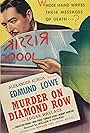
  • Edmund Lowe in Murder on Diamond Row (1937)
    Murder on Diamond Row
    6.1
    • camera operator
    • 1937
  • Men Are Not Gods (1936)
    Men Are Not Gods
    6.0
    • operating camera man
    • 1936
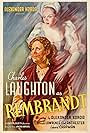
  • Charles Laughton in Rembrandt (1936)
    Rembrandt
    7.0
    • camera operator
    • 1936

Personal details

  • Alternative names
    • Bob Klasker
  • Born
    • August 13, 1913
    • Perth, Western Australia, Australia
  • Died
    • August 16, 1981
    • London, England, UK(aortic stenosis)

Did you know

  • Trivia
    He was proposed by producer Harry Saltzman as director of photography for "Billion Dollar Brain" (1967), but his initial interview with director Ken Russell was disastrous - Russell, perhaps to assert himself over Saltzman, was insulting about Krasker's work on the recent film, "The Trap". Krasker replied that Russell needed a documentary cameraman and turned the film down, never working on a feature film again. He did photograph a couple of short films and several commercials later on, though.

Contribute to this page

Suggest an edit or add missing content
  • Learn more about contributing
Edit page

More to explore

Recently viewed

You have no recently viewed pages
Get the IMDb app
Sign in for more accessSign in for more access
Follow IMDb on social
Get the IMDb app
For Android and iOS
Get the IMDb app
  • Help
  • Site Index
  • IMDbPro
  • Box Office Mojo
  • License IMDb Data
  • Press Room
  • Advertising
  • Jobs
  • Conditions of Use
  • Privacy Policy
  • Your Ads Privacy Choices
IMDb, an Amazon company

© 1990-2026 by IMDb.com, Inc.