Release calendarTop 250 moviesMost popular moviesBrowse movies by genreTop box officeShowtimes & ticketsMovie newsIndia movie spotlight
    What's on TV & streamingTop 250 TV showsMost popular TV showsBrowse TV shows by genreTV news
    What to watchLatest trailersIMDb OriginalsIMDb PicksIMDb SpotlightFamily entertainment guideIMDb Podcasts
    OscarsPrimetime EmmysToronto Int'l Film FestivalFall TV GuideMost Anticipated This MonthSTARmeter AwardsAwards CentralFestival CentralAll events
    Born todayTrending peopleCelebrity news
    IMDb LabsHelp centerContributor zonePolls
For industry professionals
  • Language
  • Fully supported
  • English (United States)
    Partially supported
    Some content may be auto-translated
  • Français (Canada)
  • Français (France)
  • Deutsch (Deutschland)
  • हिंदी (भारत)
  • Italiano (Italia)
  • Português (Brasil)
  • Español (España)
  • Español (México)
Watchlist
Sign in
  • Fully supported
  • English (United States)
    Partially supported
    Some content may be auto-translated
  • Français (Canada)
  • Français (France)
  • Deutsch (Deutschland)
  • हिंदी (भारत)
  • Italiano (Italia)
  • Português (Brasil)
  • Español (España)
  • Español (México)
Use app
  • Biography
  • Awards
  • Trivia
IMDbPro

Lee Garmes(1898-1978)

  • Cinematographer
  • Director
  • Producer
IMDbProStarmeterSee rank
Lee Garmes at an event for Shanghai Express (1932)
One of the most innovative of pioneer cameramen, Lee Garmes started his career on the East Coast with the New York Motion Picture Company, but was soon persuaded by the director Thomas H. Ince to join him in Hollywood. Garmes quickly climbed his way up the ladder, from painter's assistant to prop boy (future director Henry Hathaway shared the same duties at 'Inceville'), to camera assistant. He struck up a singularly fruitful collaboration with director Malcolm St. Clair, with whom he worked on one- and two-reel shorts. Many of these early comedies were shot on a shoe-string budget and necessitated clever improvisation, especially in the usage of lead-sheet reflectors (re-directing sunlight) which substituted for proper lighting. Garmes also introduced incandescent tungsten filament Mazda lights as a significant cost-saving venture. In 1925, now as a fully-fledged director of photography, Garmes went over to Paramount, first under contract from 1925 to 1926. He perfected his craft at First National and Warner Brothers (1927-1930), before returning to Paramount and making a significant contribution to some of the most outstanding black-and-white films made by the studio during the early and mid-1930's. His most recognizable trademark was to naturally light his sets from a northward orientation.

Said to have been influenced by the paintings of Rembrandt, Garmes showed a great flair in the use of chiaroscuro, light and shade, which enhanced the expressionistic European look of darkly exotic ventures like Morocco (1930) and Shanghai Express (1932). Both pictures were directed by Josef von Sternberg and starred one of Paramount's most bankable assets, Marlene Dietrich, flatteringly photographed by Garmes with subdued lighting amid swirling, misty backgrounds. "Shanghai Express" led to an Academy Award and established Garmes as one of the top cinematographers in the business. His career suffered a setback, however, when he was replaced by David O. Selznick months into shooting Gone with the Wind (1939) (Selznick objected to the Garmes technique of soft lighting, preferring the harsher 'picture postcard' colours). Though the first hour of GWTW was almost entirely shot by Garmes (most of it directed by George Cukor, who was also fired), he was not credited for his efforts.

Lee Garmes imbued many more seminal films of the 1940's and 50's with his own particular style, creating the romantic moods of Lydia (1941), the exotic splendour of Alexander Korda's technicolor The Jungle Book (1942) and the semi-documentary realism of William Wyler's Detective Story (1951). He became one of few cinematographers to be given additional responsibilities in directing and production and in 1972 became one of the first advocates for the use of videotape in filmmaking. Garmes was twice recipient of the Eastman Kodak Award. He served as present of the American Society of Cinematographers from 1960 to 1961.
BornMay 27, 1898
DiedAugust 31, 1978(80)
BornMay 27, 1898
DiedAugust 31, 1978(80)
IMDbProStarmeterSee rank
  • Won 1 Oscar
    • 1 win & 3 nominations total

Photos3

View Poster
View Poster
View Poster

Known for

Shanghai Express (1932)
Shanghai Express
7.3
  • Cinematographer
  • 1932
Ann Dvorak, Paul Muni, and Osgood Perkins in Scarface (1932)
Scarface
7.7
  • Cinematographer
  • 1932
Gary Cooper and Marlene Dietrich in Morocco (1930)
Morocco
7.0
  • Cinematographer
  • 1930
Shirley Temple, Claudette Colbert, Joseph Cotten, and Jennifer Jones in Since You Went Away (1944)
Since You Went Away
7.5
  • Cinematographer
  • 1944

Credits

IMDbPro

Cinematographer


  • Bob Terry in The Forsaken Westerns (2017)
    The Forsaken Westerns
    8.0
    TV Series
    • director of photography
    • 2018
  • O.J. Simpson, Tim Buckley, and Linda Gillen in Why (1973)
    Why
    5.4
    • Cinematographer
    • 1973
  • Why
    Short
    • Cinematographer
    • 1971
  • Dean Martin and Stella Stevens in How to Save a Marriage and Ruin Your Life (1968)
    How to Save a Marriage and Ruin Your Life
    6.3
    • director of photography
    • 1968
  • Henry Fonda, Jason Robards, and Joanne Woodward in A Big Hand for the Little Lady (1966)
    A Big Hand for the Little Lady
    7.3
    • director of photography
    • 1966
  • Lady in a Cage (1964)
    Lady in a Cage
    6.7
    • director of photography
    • 1964
  • Gary Lockwood in The Lieutenant (1963)
    The Lieutenant
    8.2
    TV Series
    • Cinematographer
    • 1963
  • Richard Beymer and Susan Strasberg in Hemingway's Adventures of a Young Man (1962)
    Hemingway's Adventures of a Young Man
    6.3
    • director of photography
    • 1962
  • Bert Lahr and Jan Miner in Ten Girls Ago (1962)
    Ten Girls Ago
    8.1
    Short
    • Cinematographer
    • 1962
  • Robert Reed and E.G. Marshall in The Defenders (1961)
    The Defenders
    7.9
    TV Series
    • director of photography
    • Cinematographer (uncredited)
    • 1961
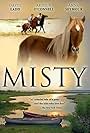
  • David Ladd, Arthur O'Connell, and Pam Smith in Misty (1961)
    Misty
    6.6
    • director of photography
    • 1961
  • The Texan (1958)
    The Texan
    7.6
    TV Series
    • director of photography
    • 1960
  • Happy Anniversary (1959)
    Happy Anniversary
    5.7
    • director of photography
    • 1959
  • Howard Keel, Susan Kohner, and John Saxon in The Big Fisherman (1959)
    The Big Fisherman
    5.4
    • photographed in eastman color by
    • 1959
  • 14 x 22 movie poster
    Never Love a Stranger
    5.5
    • director of photography
    • 1958

Director


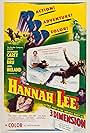
  • Macdonald Carey, Joanne Dru, and John Ireland in Hannah Lee: An American Primitive (1953)
    Hannah Lee: An American Primitive
    6.0
    • Director
    • 1953
  • Actors and Sin (1952)
    Actors and Sin
    5.3
    • co-director
    • 1952
  • Rita Hayworth and Douglas Fairbanks Jr. in Angels Over Broadway (1940)
    Angels Over Broadway
    6.5
    • co-director
    • 1940
  • Mara Loseff in The Sky's the Limit (1938)
    The Sky's the Limit
    • Director
    • 1938
  • Elisabeth Bergner in Dreaming Lips (1937)
    Dreaming Lips
    5.4
    • co-director
    • 1937
  • Miss Bracegirdle Does Her Duty
    Short
    • Director
    • 1936
  • Claude Rains, Whitney Bourne, and Margo in Crime Without Passion (1934)
    Crime Without Passion
    7.1
    • Director
    • 1934

Producer


  • Shame, Shame on the Bixby Boys (1978)
    Shame, Shame on the Bixby Boys
    7.5
    • producer (uncredited)
    • 1978
  • Macdonald Carey, Joanne Dru, and John Ireland in Hannah Lee: An American Primitive (1953)
    Hannah Lee: An American Primitive
    6.0
    • producer
    • 1953
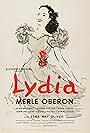
  • Merle Oberon in Lydia (1941)
    Lydia
    6.3
    • associate producer
    • 1941
  • Harry Carey, Richard Carlson, Jean Parker, C. Aubrey Smith, Helen Vinson, and Charles Winninger in Beyond Tomorrow (1940)
    Beyond Tomorrow
    6.5
    • producer
    • 1940
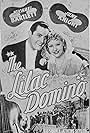
  • Michael Bartlett and June Knight in The Lilac Domino (1937)
    The Lilac Domino
    6.7
    • producer
    • 1937
  • Elisabeth Bergner in Melo (1932)
    Melo
    6.7
    • co-producer
    • 1932

Personal details

  • Born
    • May 27, 1898
    • Peoria, Illinois, USA
  • Died
    • August 31, 1978
    • Los Angeles, California, USA(undisclosed)
  • Spouses
      Ruth Hall1933 - August 31, 1978 (his death, 2 children)
  • Other works
    Unsold pilot: Shot a pilot for a Western TV series that was to be titled "Mountain Man".
  • Publicity listings
    • 3 Articles

Did you know

  • Trivia
    Worked for George Cukor on the film Gone with the Wind (1939) but was uncredited, as was Cukor.
  • Quotes
    A cameraman is often the savior of a film. His lighting can be the main factor in its success.
  • Salary
    • Gone with the Wind
      (1939)
      $750 /week

Contribute to this page

Suggest an edit or add missing content
  • Learn more about contributing
Edit page

More to explore

Recently viewed

You have no recently viewed pages
Get the IMDb app
Sign in for more accessSign in for more access
Follow IMDb on social
Get the IMDb app
For Android and iOS
Get the IMDb app
  • Help
  • Site Index
  • IMDbPro
  • Box Office Mojo
  • License IMDb Data
  • Press Room
  • Advertising
  • Jobs
  • Conditions of Use
  • Privacy Policy
  • Your Ads Privacy Choices
IMDb, an Amazon company

© 1990-2026 by IMDb.com, Inc.